
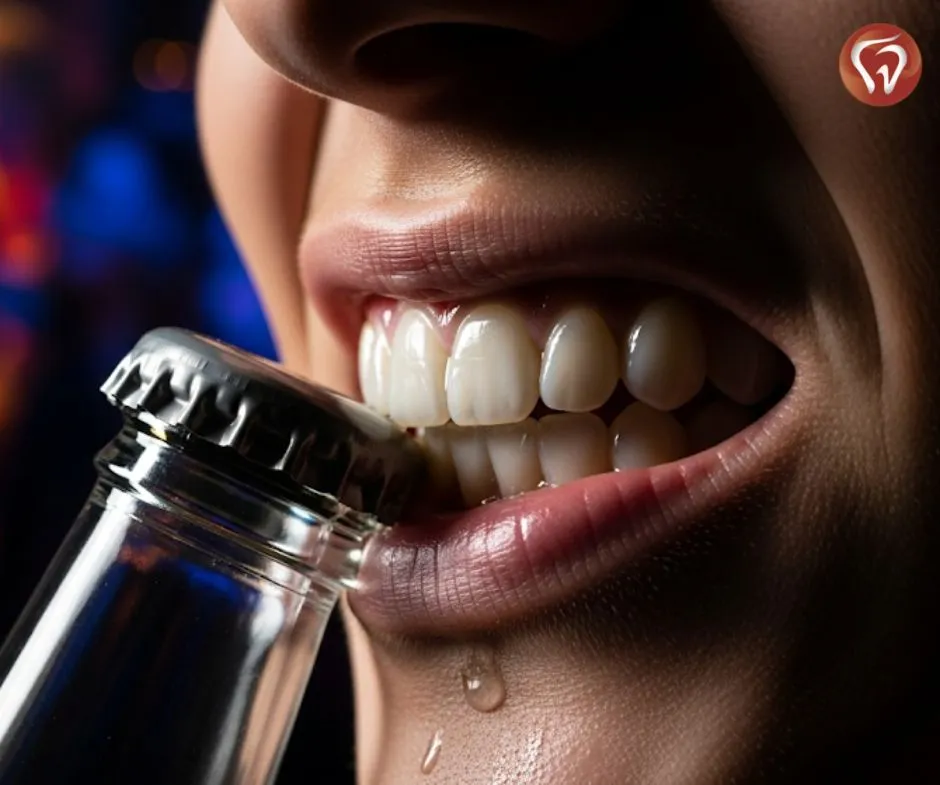
Your Teeth Aren’t Scissors or Bottle Openers
You’re at a party, someone can’t find a bottle opener, and before anyone can stop you, you’ve popped the cap off with your teeth. Everyone cheers, but later that night, you feel a sharp pain when you bite into food. What seemed like a harmless party trick could actually be the beginning of a dental problem.
At Signature Smilez Family Dental, we see this all the time. People use their teeth to rip open snack bags, chew on pens, hold hairpins, or even pry open stubborn packaging. These habits feel convenient, but they put your smile at serious risk. Teeth are strong, but they’re not indestructible tools.
Today, we’ll get to know why using your teeth as tools is dangerous, the damage it can cause, and how you can protect your smile. By the end, you’ll see why keeping your teeth for chewing food (and nothing else!) is the best way to avoid chips, cracks, and costly treatments.
Why Teeth Aren’t Built for Everyday Shortcuts
Your teeth are designed for one main job: eating and chewing food. Enamel, the tough, protective outer layer, is the hardest substance in the body. But enamel is tough in the right conditions, not unbreakable against the wrong forces.
When you chew food, your teeth apply force in predictable, natural ways. But when you twist, tear, or bite down on non-food objects, you place unnatural stress on them. Over time, that stress can wear down enamel, cause micro-cracks, or even break a tooth entirely.
Unlike bones, tooth enamel can’t regenerate. Once it’s worn down or damaged, it’s permanently lost – making prevention and early care essential.
The Most Common “Teeth-as-Tools” Habits (and Why They’re Risky)
1. Opening Bottles or Caps
This might look like a cool party trick, but it can instantly crack or chip your teeth. The metal edges scrape against enamel, creating fractures that may require crowns or extractions.
Risk level: Very high – one wrong move and you could damage a front tooth permanently.
2. Tearing Open Snack Bags or Packaging
We’ve all done it, struggling with a stubborn chip bag, and you decide to rip it open with your teeth. Unfortunately, this habit can cut your gums, wear enamel, or loosen dental work like fillings.
Risk level: Moderate to high – repeated stress weakens teeth gradually.
3. Chewing Pens or Pencils
A classic stress habit, but one with serious long-term effects. Pens and pencils are harder than they look. Chewing them flattens biting edges, causes micro-cracks, and in some cases, shifts bite alignment.
Risk level: Moderate – more damage over time than instantly.
4. Holding Objects in Your Teeth
Hairpins, nails, spare keys, people often hold small items between their teeth when their hands are busy. This not only risks chips but also introduces harmful bacteria into your mouth.
Risk level: Moderate – bacteria exposure is a double threat.
5. Nail Biting
Nail biting is both a cosmetic and a dental problem. It wears down tooth edges, damages gum tissue, and may even lead to jaw discomfort if the habit is constant.
Risk level: Low to moderate – but damaging when it’s frequent.
6. Using Teeth to Cut Thread or Tape
Many people use their teeth to break the thread or tape. But these materials can damage enamel, and sharp edges can irritate gums.
Risk level: Moderate – repetitive wear leads to sensitivity.
What Happens When You Use Teeth as Tools?
When teeth are used incorrectly, the damage builds up in stages. Here’s how it usually progresses:
- Micro-damage – Small enamel cracks (often painless) appear.
- Chips or craze lines – Tiny pieces of enamel break off, visible when you smile.
- Deeper fractures – Pressure spreads cracks deeper into the tooth.
- Pulp involvement – If cracks reach the inner pulp, you may need a root canal.
- Tooth loss – Severe fractures can make a tooth unsalvageable.
Other issues that develop include:
- Increased sensitivity to hot, cold, or sweet foods
- Gum irritation or cuts from sharp packaging
- Infection risk if cracks expose dentin or pulp
- Damage to dental work like crowns, veneers, or fillings
Real-Life Example from the Dental Chair
One of our patients came in after trying to open a juice bottle with her front teeth. It resulted in a large crack down her central incisor. What could have been avoided with a bottle opener turned into multiple visits for a crown and weeks of self-consciousness.
Dr. Jacob often says: “Your teeth are meant for eating, not tools. Every shortcut comes with a cost.”
Our dentists and hygienists see these types of cases, and most patients admit they didn’t realize how risky the habit was until it was too late.
Why Enamel Damage Matters So Much
Enamel is your tooth’s armor. It protects against decay, bacteria, and sensitivity. But once that armor is weakened, your tooth becomes vulnerable.
Without strong enamel, you may face:
- Tooth sensitivity
- Higher cavity risk
- Visible cracks or chips
- Weakened chewing strength
Unlike skin or bone, enamel doesn’t regenerate. The only way to address damage is through dental treatment. That’s why prevention matters most.
How to Break the Habit (Practical Tips)
Breaking the habit of using teeth as tools takes awareness and replacement strategies. Here’s what our dental team recommends:
Replace Teeth with the Right Tools
- Keep scissors in your kitchen, office, and car.
- Carry a small bottle opener if you often find yourself needing one.
- Use your hands or actual tools, not your teeth.
Address Stress-Related Habits
- If you chew pens or bite nails when stressed, swap the habit with sugar-free gum.
- Use stress balls, fidget spinners, or mindful breathing techniques.
- Keep pens and pencils out of your mouth entirely.
Protect Against Night Grinding
Grinding (bruxism) is another hidden cause of cracks. If you wake with jaw pain or notice flattened teeth, our dentists may suggest a custom nightguard to protect your enamel.
Stay Consistent with Dental Checkups
Regular visits help us spot early damage. Many small cracks aren’t visible to patients but can be caught by our dental team before they become major issues.
Treatment Options for Damaged Teeth
If you’ve already chipped or cracked a tooth, don’t delay treatment. Waiting can make the damage worse. Depending on the severity, our dentists may recommend:
- Dental bonding – repairs small chips with tooth-colored resin
- Crowns – cover larger cracks or weakened teeth
- Root canal treatment – if the pulp is exposed or infected
- Dental implants – an option when a natural tooth can’t be restored
The good news is that with proper care and prompt treatment, most patients can restore both function and appearance.
Long-Term Benefits of Protecting Your Teeth
When you stop using teeth as tools, you:
- Keep your enamel strong
- Lower the risk of dental emergencies
- Maintain a confident, chip-free smile
- Save money by avoiding major treatments
- Protect dental work like crowns, veneers, and fillings
Your teeth are meant to last a lifetime, but only if you protect them.
Keep Your Smile Strong with Professional Care
At Signature Smilez Family Dental, our goal is simple: to keep your teeth healthy for life. Whether you’ve chipped a tooth, noticed sensitivity, or just want advice on protecting your enamel, we’re here to help.
Don’t let everyday habits put your smile at risk. Book your appointment today at Signature Smilez Family Dental, and let our caring dental team provide the guidance and care you need for a confident, lasting smile.
FAQs
1. Is it safe to use teeth to open bottles occasionally?
No. Even one attempt can cause cracks or chips. It’s one of the riskiest “teeth-as-tools” habits and should always be avoided.
2. Can chewing on pens really cause long-term damage?
Yes. Over time, chewing on pens flattens biting surfaces, creates micro-cracks, and may even shift your bite alignment.
3. What should I do if I feel a sharp edge after using my teeth as a tool?
That may be a chip. Rinse your mouth, avoid chewing on that side, and call our dental team right away for an evaluation.
4. How do I stop nail biting or pen chewing if it’s unconscious?
Start with awareness. Replace the habit with sugar-free gum or stress toys. If the habit continues, talk with our dental team. We can provide tailored strategies to help.